Inclusive playground design vs. basic accessibility
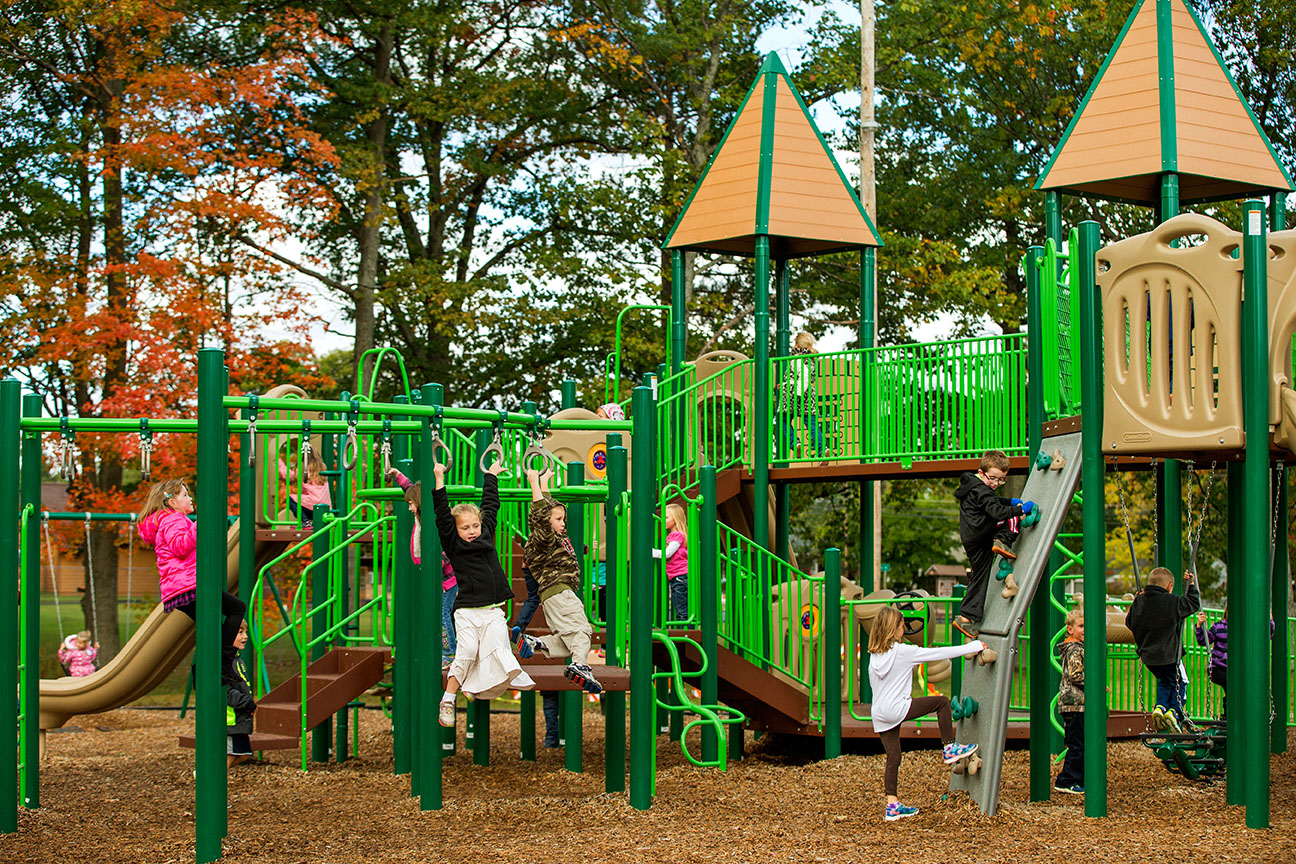
An inclusive playground design is a play environment planned so children of all abilities can reach, use, and enjoy key experiences together—not just enter the site. It combines physical access, sensory variety, social opportunities, and quiet spaces so more children can participate with independence and dignity.
Many teams begin with a simpler question: "Will this playground meet ADA requirements?" That is an essential baseline, but it is not the full measure of inclusion. ADA guidelines focus on access—routes, clearances, and certain equipment types. Inclusive design asks a broader question: what happens once a child arrives at the play space, and can they truly participate?
For example, a playground might meet ADA by providing a ramp to a single deck and a few ground-level activities. On paper, the site is accessible. In practice, a child who uses a mobility device may still have limited choices, while a child with sensory processing differences might find the space overwhelming and hard to navigate.
Research-based frameworks like PlayCore’s Me2: 7 Principles of Inclusive Playground Design focus on the whole child—physical, cognitive, sensory, social-emotional, communication, and independence. They shift the goal from "Can a child get here?" to "Can a child play here in ways that matter for their development?" That distinction has real implications for safety, liability, and community use over time.
Start with your community, site, and users
Before choosing equipment, the most effective inclusive playground projects begin with a clear picture of who the space is for and how it will be used. This means documenting age groups, abilities, developmental needs, and the practical realities of supervision, programming, and maintenance.
A simple planning exercise is to map out your core user groups: early childhood, elementary students, middle schoolers, caregivers, siblings, and community members with disabilities. Then identify specific needs, such as support for children with autism, mobility device users, or children who benefit from quieter, smaller-scale play experiences.
Guidance from resources like PlayCore’s intergenerational recreation planning tools emphasizes starting with a needs assessment. This includes reviewing demographics, existing barriers (like steep approaches or inconsistent surfacing), and feedback from families and educators. Communities that take this step tend to see higher overall use because the playground is tuned to real users, not a generic template.
Site conditions matter as much as equipment. In Michigan and Indiana, for example, freeze–thaw cycles, drainage patterns, and snow removal can affect surfacing performance and accessible routes. Documenting shade, noise from nearby streets, and proximity to parking or restrooms will help you plan inclusive circulation, seating, and quiet areas from the start.
Designing for physical accessibility and independent movement
Physical accessibility is the foundation of inclusive playground design. That includes continuous accessible routes from parking and paths to the playground entry, around the play area, and to key experiences like swings, slides, and ground-level play panels. If any link in that chain fails, participation breaks down.
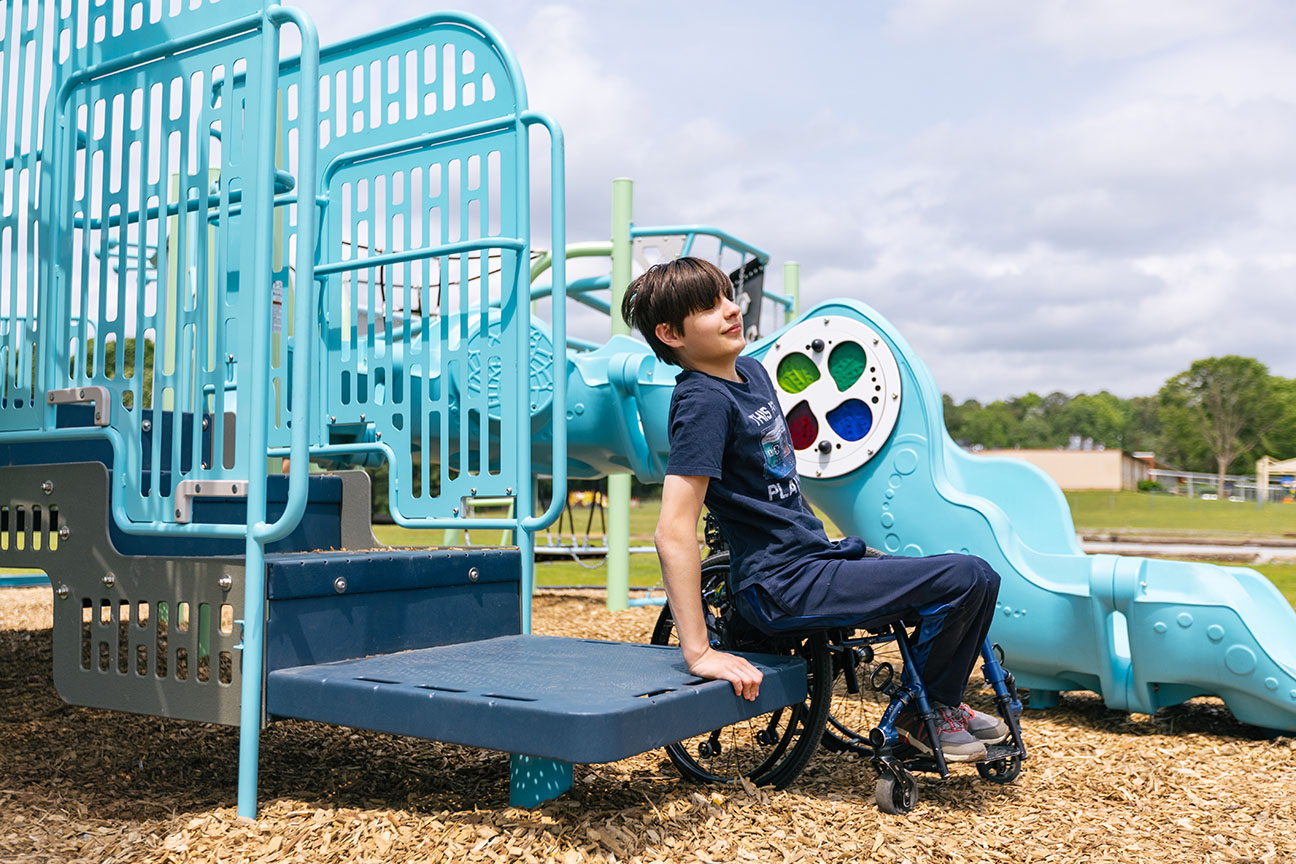
Best practices recommend firm, stable surfacing along these routes and at transfer points, as well as appropriate slopes and turning clearances. Accessible ramps and transfer systems allow children who use mobility devices—or who have limited strength or balance—to reach elevated play components and move between activities without needing constant adult lifting.
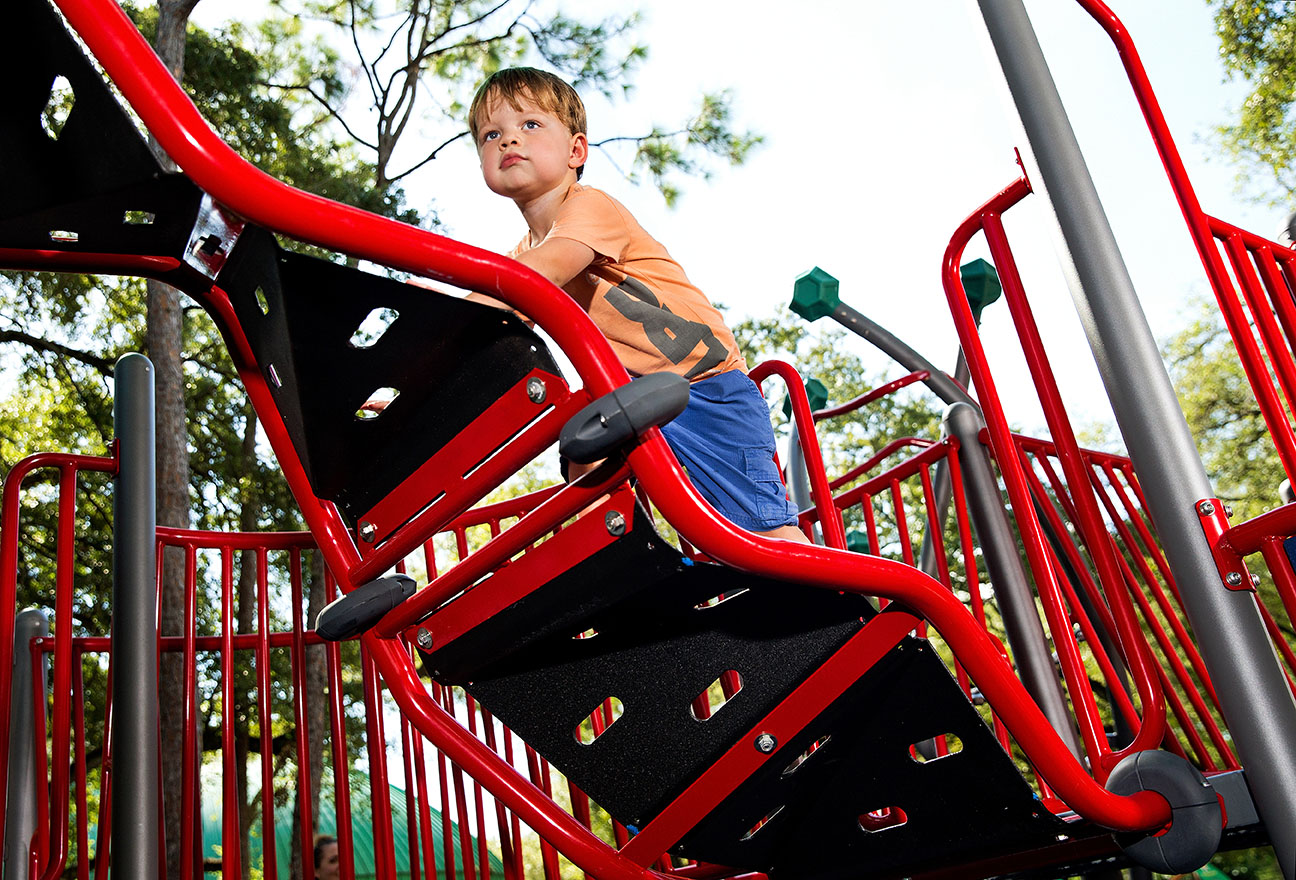
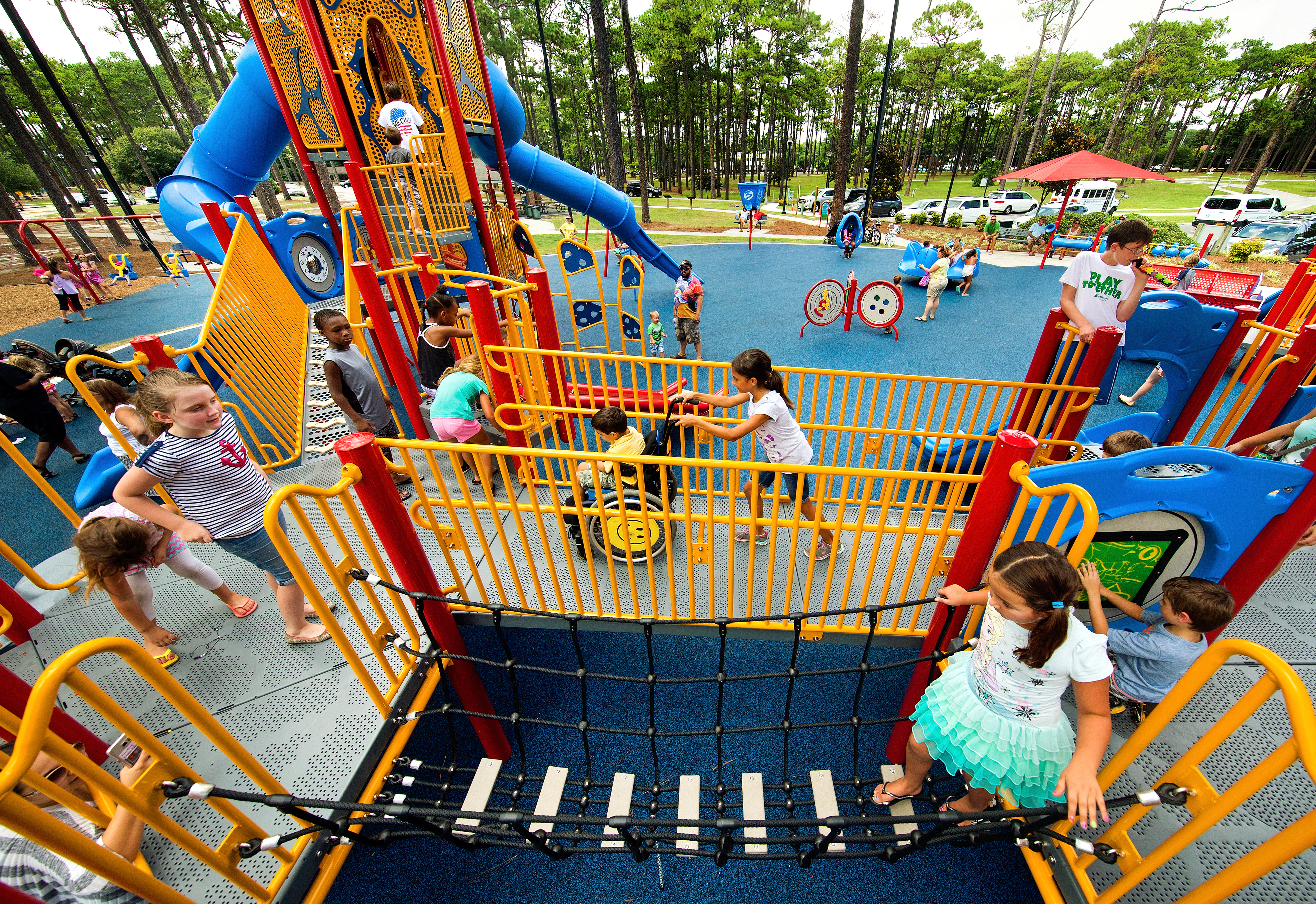
Equally important is providing meaningful ground-level play that is reachable without climbing. This can include interactive panels, sensory play elements, motion activities, and social gathering points at grade. A child who cannot or does not choose to access elevated decks should still have opportunities for movement, challenge, and cooperative play.
Resources like GameTime’s planning guidance for parks and schools highlight how route design, surfacing selection, and component placement interact. For many communities, the most successful designs cluster accessible experiences along primary circulation paths, so children using mobility devices are not pushed to the margins of the space.
Designing for sensory, social, and emotional inclusion
Inclusive playgrounds do more than support movement. They also consider how children process sound, touch, motion, and social interaction. The goal is to provide options—places to engage, and places to pause—within the same overall environment.
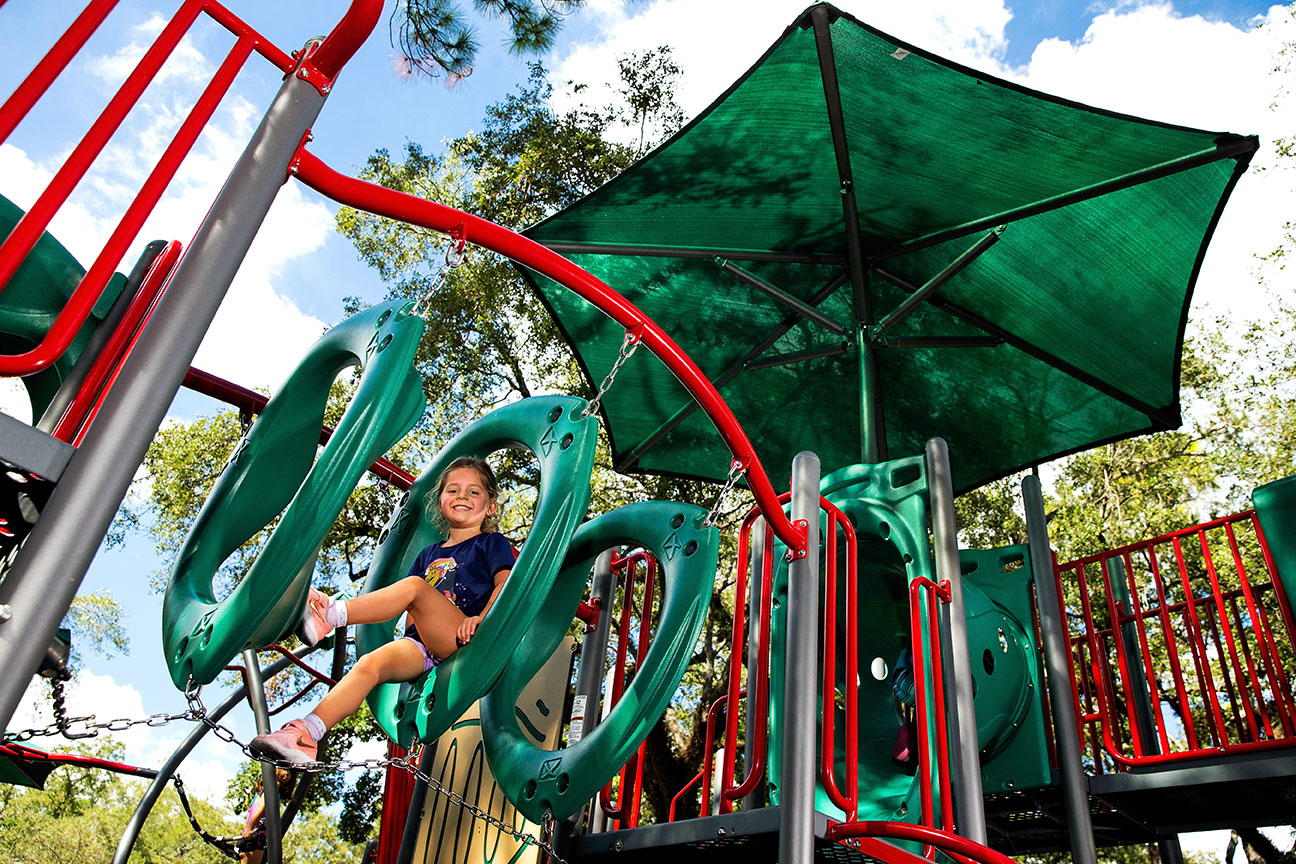
Sensory-rich elements might include textured panels, musical instruments, spinning or rocking experiences, and visual interest through color and form. Research summarized by partners like GameTime notes that unstructured play supports social skills, emotional regulation, and cognitive flexibility, especially when children can choose how and where to participate.
For children with autism or sensory processing differences, predictable spaces and clear boundaries can reduce anxiety. Quiet nooks near—but not inside—the most active zones give children and caregivers a place to reset without leaving the playground entirely. Shaded seating, smaller-scale play elements, and low-stimulation pathways all contribute to emotional safety.
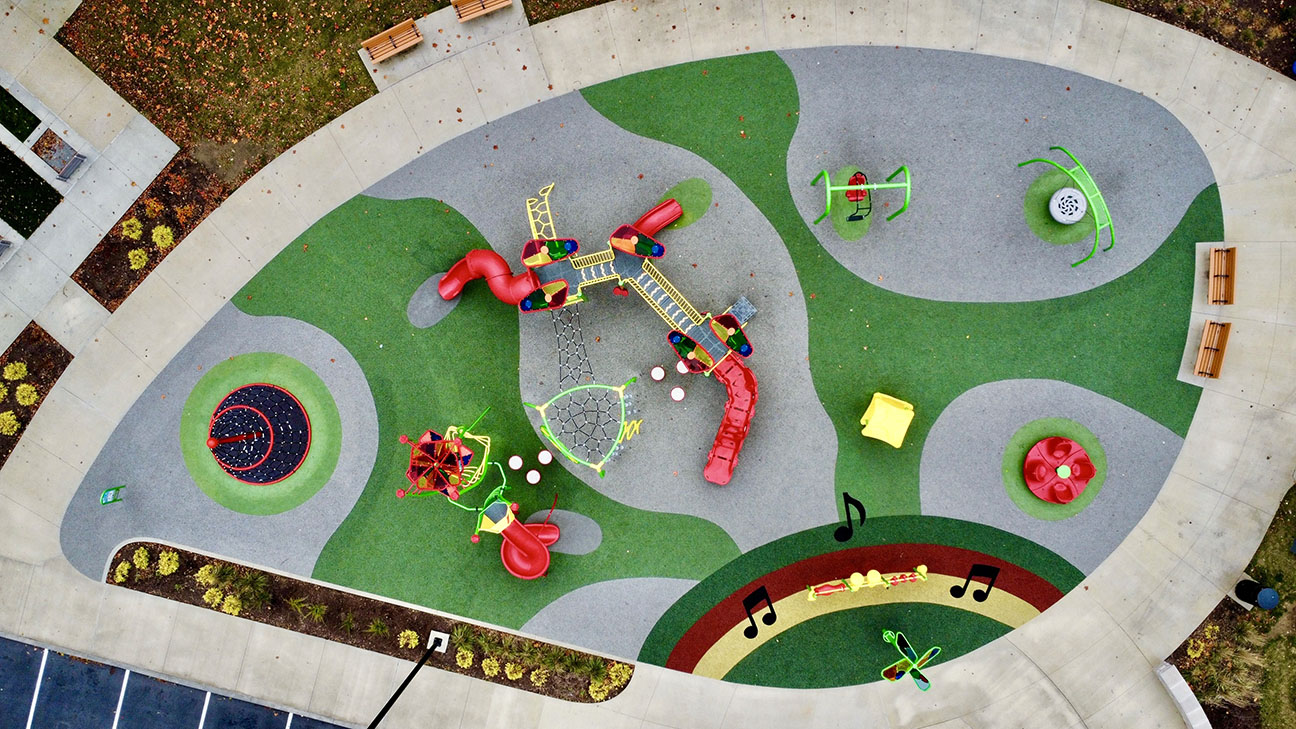
Social inclusion means designing for interaction, not just parallel use. Cluster cooperative play opportunities—such as musical play, group motion experiences, or dramatic play settings—along accessible routes. This helps children of varying abilities find shared activities. It also supports siblings and peers who may want to play together but need different levels of challenge or support.
Planning equipment, surfacing, and layout for the long term
Inclusive playground design is a long-term investment. Decisions about equipment mix, surfacing, and layout will affect maintenance, risk management, and user experience for years. Planning with lifecycle in mind can prevent costly changes later.
Start by aligning your design with clearly stated project goals: for example, increasing participation among children with disabilities, supporting regulation for students with behavioral needs, or creating multigenerational gathering space. Frameworks like Me2 help translate these goals into specific play opportunities—physical, cognitive, sensory, and social—so you can check whether your layout truly supports them.
Surfacing is a key decision point. The right system can improve accessibility and reduce fall-related injuries, but it must also perform in your climate and maintenance context. Guidance from organizations like PlayCore underscores the link between surfacing quality, inclusive access, and long-term safety.
Layout choices also affect supervision and wear patterns. Locating high-motion equipment where it can be easily observed, grouping quieter activities near seating for caregivers, and planning clear circulation loops can all extend the useful life of the playground while supporting safer use.
How Sinclair Recreation supports inclusive playground projects
For many schools, municipalities, and organizations, the challenge is not believing in inclusion—it is knowing how to translate that commitment into a workable plan and a funded, installed playground. This is where a structured process and experienced partners matter.
Sinclair Recreation begins by understanding your community: who will use the space, what abilities and developmental needs you are planning for, and what constraints—budget, site, timeline—you must navigate. From there, we help you explore inclusive play solutions, including accessible routes, sensory and musical play, ground-level experiences, and multigenerational gathering spaces.
Design then centers on inclusion, not just equipment count. Using research-based frameworks and manufacturer resources from partners like GameTime and PlayCore, we work with your team to align components, surfacing, and layout with your goals for accessibility, social connection, and long-term safety.
Finally, we support you as the project moves toward installation, coordinating with contractors, addressing site conditions common in Michigan and Indiana, and helping you plan for maintenance over the life of the playground. If you are ready to discuss an upcoming project, use the contact or request a quote option on this page to start the conversation with our team.