Planning a new playground is exciting, but one of the first questions schools, parks, churches, and municipalities ask is: How long does it take to build a playground?
The answer depends on several factors, including design complexity, permitting, site preparation, equipment availability, and installation schedules. Understanding a realistic playground installation timeline helps avoid delays, manage expectations, and keep projects moving smoothly.
In this guide, we’ll break down the typical timeline for building a playground from initial planning to final installation.
Average Playground Installation Timeline
For most projects, the full playground installation timeline ranges from 8 to 20 weeks from planning to completion.
Smaller playgrounds with minimal site work may move faster, while large custom playgrounds can take several months.
Here’s a general breakdown:
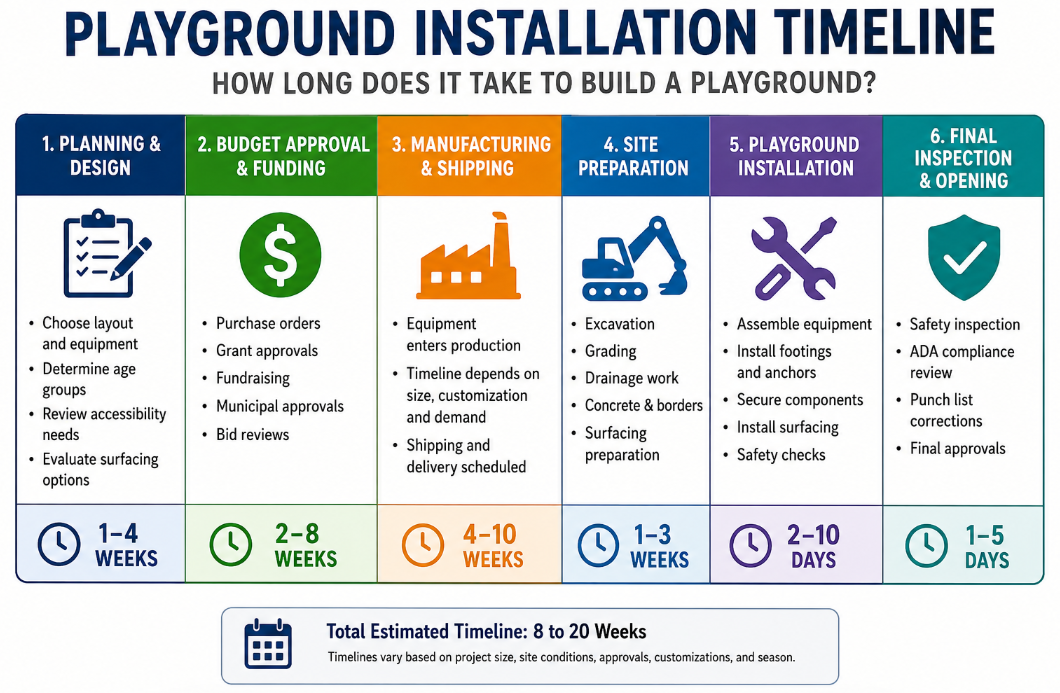
Every project is different, but understanding each phase helps explain where time is spent during the process.
Step 1: Planning and Playground Design
The first stage of any playground project is determining goals, budget, and design preferences.
During this phase, organizations typically:
- Choose a playground layout
- Select equipment
- Determine age groups served
- Review ADA accessibility needs
- Discuss inclusive playground features
- Evaluate surfacing options
Typical Timeline: 1–4 Weeks
Simple playground replacements may move quickly, while custom-designed community playgrounds often require additional revisions and stakeholder input.
For schools and municipalities, this stage may also include:
- School board approvals
- Community meetings
- Grant applications
- Safety reviews
Step 2: Budget Approval and Funding
Once the design is finalized, projects often move into budget approval.
This phase can include:
- Purchase orders
- Grant funding approvals
- Fundraising
- Municipal approval processes
- Bid reviews
Typical Timeline: 2–8 Weeks
This step is often one of the longest parts of the playground installation timeline, especially for public projects.
Private organizations and churches may move faster, while municipal projects often require formal approval procedures.
Step 3: Playground Manufacturing and Shipping
After the playground order is placed, the equipment enters production.
Typical Timeline: 4–10 Weeks
The manufacturing timeline depends on:
- Playground size
- Customization
- Material availability
- Seasonal demand
- Freight scheduling
Custom playground structures typically take longer than standard designs.
Spring and summer are often the busiest seasons for playground manufacturers, which can increase lead times.
Step 4: Site Preparation
Before installation begins, the site must be properly prepared.
This may include:
- Excavation
- Grading
- Drainage work
- Concrete installation
- Border installation
- Surfacing preparation
Typical Timeline: 1–3 Weeks
Projects with existing infrastructure or minimal grading may move faster, while new construction sites can require additional prep work.
Weather can also affect site preparation schedules significantly.
Step 5: Playground Installation
Once equipment arrives and the site is ready, the actual playground installation begins.
Typical Timeline: 2–10 Days
The installation timeframe depends on:
- Playground size
- Number of structures
- Surfacing type
- Crew size
- Site accessibility
A small playground may be completed in just a few days, while large destination playgrounds may take several weeks.
What Happens During Installation?
Installation crews typically:
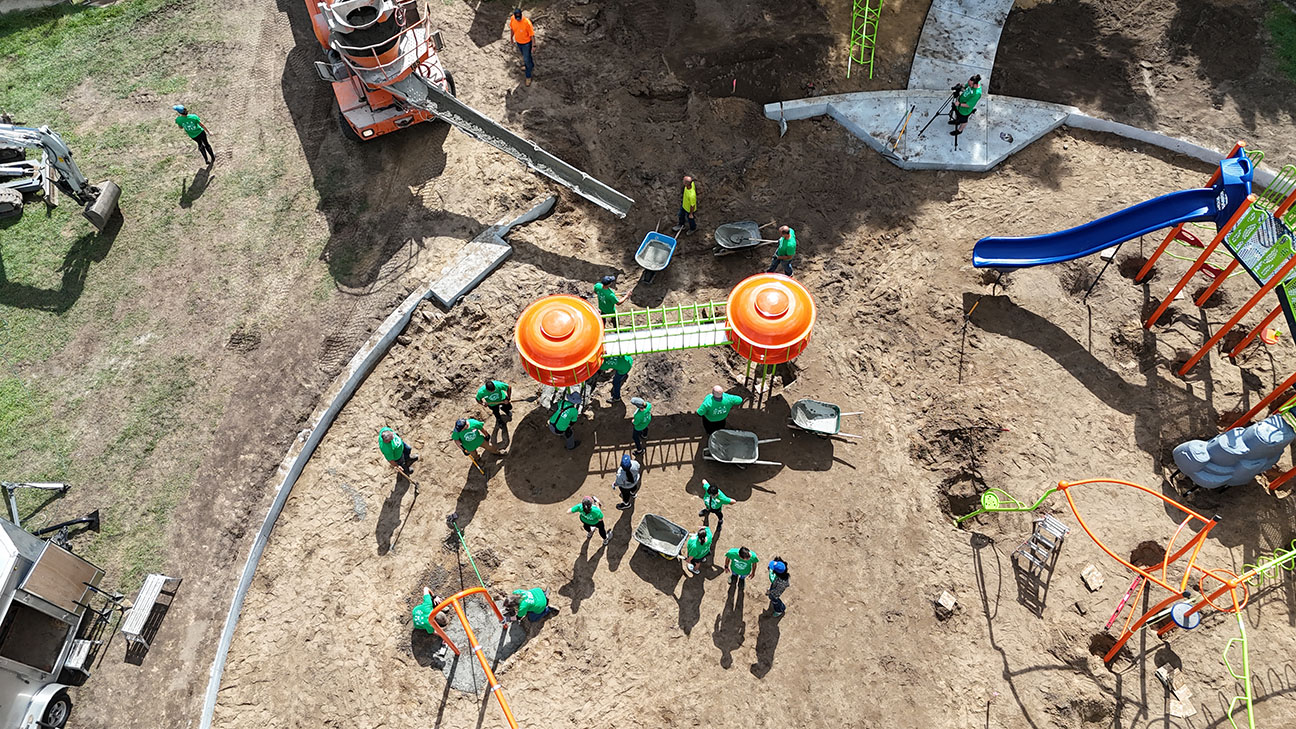
- Assemble playground equipment
- Install footings and anchors
- Secure components
- Install surfacing
- Conduct safety checks
Professional installation helps ensure compliance with safety and ADA standards.
Step 6: Final Inspection and Opening
Before the playground opens, many organizations complete a final inspection.
Typical Timeline: 1–5 Days
This step may include:
- Safety inspections
- ADA compliance reviews
- Punch list corrections
- Municipal approvals
Once completed, the playground is ready to open for use.
Factors That Can Affect Playground Installation Timelines
Not every playground follows the same schedule. Several factors can speed up or delay the process.
Weather Delays
Rain, snow, frozen ground, or excessive heat can impact:
- Concrete curing
- Excavation
- Surfacing installation
Equipment Availability
Custom components or supply chain disruptions may increase manufacturing lead times.
Permitting Requirements
Some municipalities require permits or engineering approvals before installation can begin.
Site Conditions
Poor drainage, slopes, or unexpected underground utilities can add additional work.
Seasonal Demand
Spring and summer are peak playground construction seasons. Scheduling early often helps avoid delays.
How to Speed Up a Playground Project
If timing is important, there are several ways to streamline the process.
Start Planning Early
The earlier planning begins, the easier it is to coordinate approvals, funding, and scheduling.
Choose Standard Equipment
Custom playgrounds are beautiful, but standard equipment often has shorter lead times.
Prepare the Site in Advance
Completing grading and concrete work before equipment arrives can reduce delays.
Work With Experienced Installers
Experienced playground installers can help identify potential issues before they impact the timeline.
When Is the Best Time to Build a Playground?
Many organizations install playgrounds in:
- Spring
- Summer
- Early fall
However, off-season installation can sometimes reduce scheduling delays and improve product availability.
Planning several months in advance is usually the best way to ensure completion by a desired opening date.
Final Thoughts
So, how long does it take to build a playground?
For most projects, the full playground installation timeline ranges from two to five months depending on design, approvals, manufacturing, and installation complexity.
Understanding the process ahead of time helps schools, parks, and municipalities plan more effectively and avoid unnecessary delays.
The key to a successful playground project is early planning, realistic expectations, and working with experienced playground professionals who can guide the project from concept to completion.
.jpg)
.jpg)
.jpg)
.jpg)
.jpg)
.jpg)
.jpg)