.jpg)
When planning a new playground, one of the first questions people ask is, “What is the cost to build a playground?” While every project is unique, understanding where your budget goes can help you make informed decisions and avoid unexpected expenses.
This playground budget breakdown explains the major cost categories involved in a playground project and helps schools, parks, churches, HOAs, and community organizations plan with confidence.
Understanding the Total Cost to Build a Playground
The total cost to build a playground can vary significantly based on factors such as playground size, equipment selection, site conditions, accessibility requirements, and installation methods. While many people focus solely on the equipment cost, a successful playground project includes several important components.
A typical playground budget consists of:
- Playground equipment
- Safety surfacing
- Site preparation
- Installation
- Site amenities
- Freight and delivery
- Design and permitting
Let's break down each category.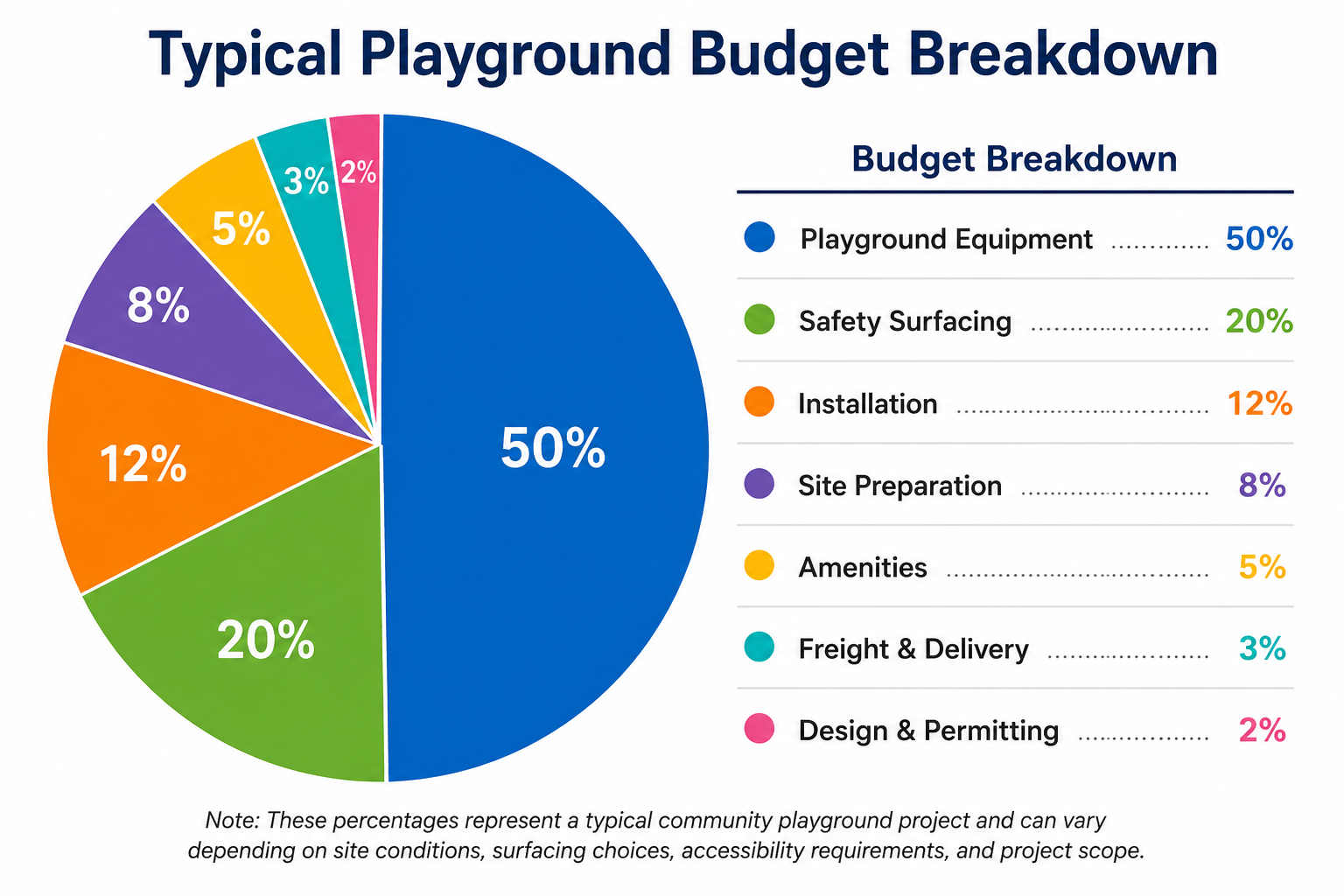
Playground Equipment: The Largest Budget Component
Playground equipment typically accounts for 40%–60% of the total project budget.
This includes:
- Multi-play structures
- Swings
- Climbers
- Slides
- Inclusive play elements
- Freestanding play components
The size of the playground, age group served, and desired play experiences all impact equipment costs. Custom designs and themed structures generally increase the overall investment.
Safety Surfacing: Protecting Children and Meeting Standards
Safety surfacing is one of the most important investments in any playground project.
Common surfacing options include:
Engineered Wood Fiber (EWF)
- Cost-effective
- ADA accessible when properly maintained
- Popular for schools and parks
Poured-in-Place Rubber
- Premium accessibility
- Low maintenance
- Long lifespan
Rubber Mulch and Synthetic Turf
- Attractive appearance
- Enhanced accessibility
- Reduced maintenance requirements
Depending on the material selected, surfacing can represent 15%–30% of the total playground budget.
Site Preparation and Excavation Costs
Before playground equipment can be installed, the site must be properly prepared.
Site preparation may include:
- Excavation
- Grading
- Drainage improvements
- Removal of existing equipment
- Utility location and protection
Projects with challenging terrain, poor drainage, or extensive demolition requirements may require a larger portion of the budget for site work.
Installation and Labor Expenses
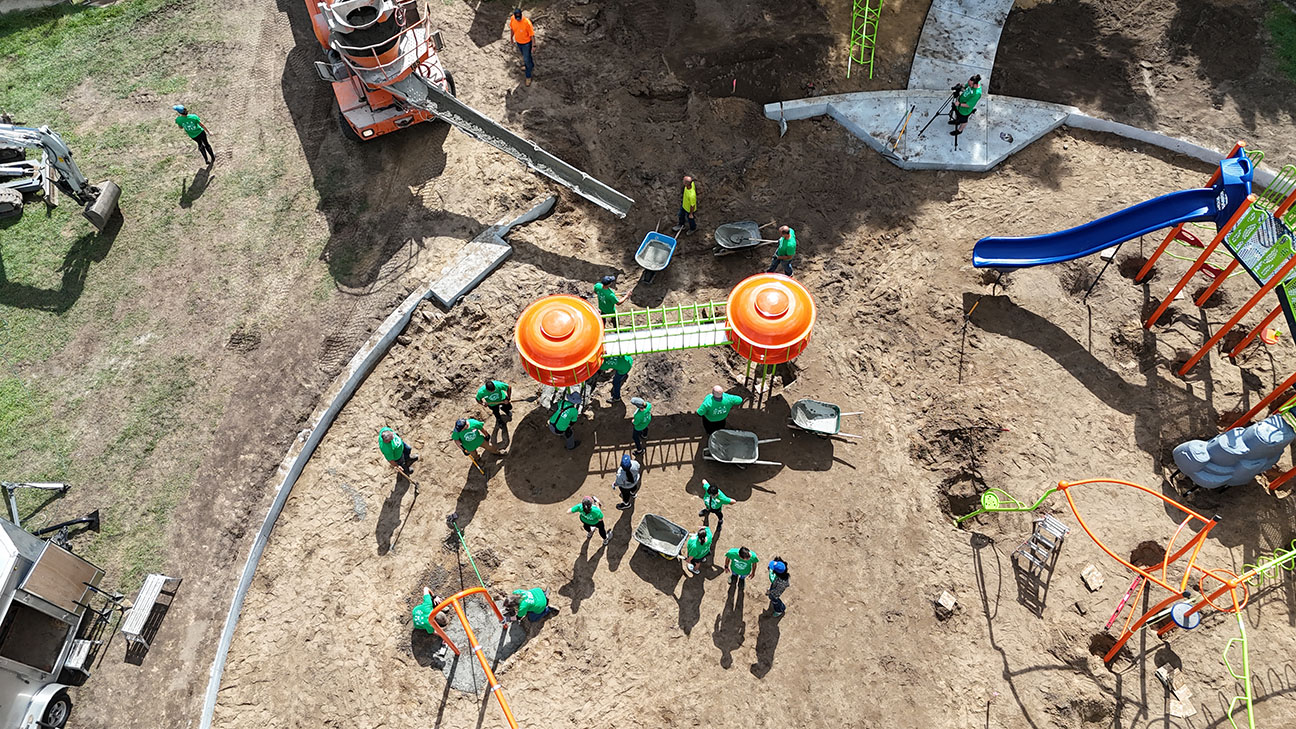
Professional installation ensures the playground is assembled correctly and complies with safety guidelines.
Installation costs often include:
- Equipment assembly
- Footing excavation
- Concrete placement
- Surfacing installation
- Final inspections
Depending on project complexity, installation may account for 10%–20% of the total cost to build a playground.
Site Amenities and Additional Features
Many organizations choose to enhance their playground with complementary site amenities.
Popular additions include:
- Benches
- Picnic tables
- Shade structures
- Bike racks
- Trash receptacles
- Site signage
- Fencing
While these features are often considered optional, they can significantly improve the overall user experience.
Freight and Delivery Costs
Because playground equipment is large and heavy, shipping costs should be factored into every project budget.
Freight costs vary based on:
- Project size
- Delivery distance
- Site accessibility
- Material weight
Working with an experienced playground provider helps ensure freight expenses are accurately estimated early in the planning process.
Design, Planning, and Permitting
Every successful playground starts with thoughtful planning.
These costs may include:
- Playground design services
- Site plans
- Permit applications
- Accessibility reviews
- Safety compliance evaluations
While design expenses represent a smaller percentage of the overall budget, they help prevent costly issues during construction.
Factors That Affect Playground Costs
Several variables can impact the final cost to build a playground:
Playground Size
Larger playgrounds require more equipment, surfacing, and installation labor.
Age Group
Playgrounds designed for multiple age groups often require additional play components.
Accessibility Goals
Inclusive playground features and accessible surfacing may increase upfront costs but provide greater community benefits.
Site Conditions
Steep grades, drainage issues, and existing site obstacles can increase preparation costs.
Customization
Themed playgrounds, custom colors, and unique designs typically require additional investment.
How to Maximize Your Playground Budget
Organizations can stretch their playground dollars by:
- Prioritizing essential play experiences
- Choosing durable, low-maintenance materials
- Planning for future expansion
- Working with experienced playground professionals
- Seeking grants and community funding opportunities
A well-planned project balances budget considerations with long-term value and community impact.
Final Thoughts
Understanding your playground budget breakdown helps eliminate surprises and creates confidence throughout the planning process. While the cost to build a playground varies from project to project, knowing where your money goes allows you to make informed decisions and maximize your investment.
Whether you're building a neighborhood park, school playground, church play area, or community destination, partnering with experienced playground professionals can help ensure your budget is used effectively and your vision becomes a reality.
.jpg)
.jpg)
.jpg)
.jpg)
.jpg)
.jpg)